
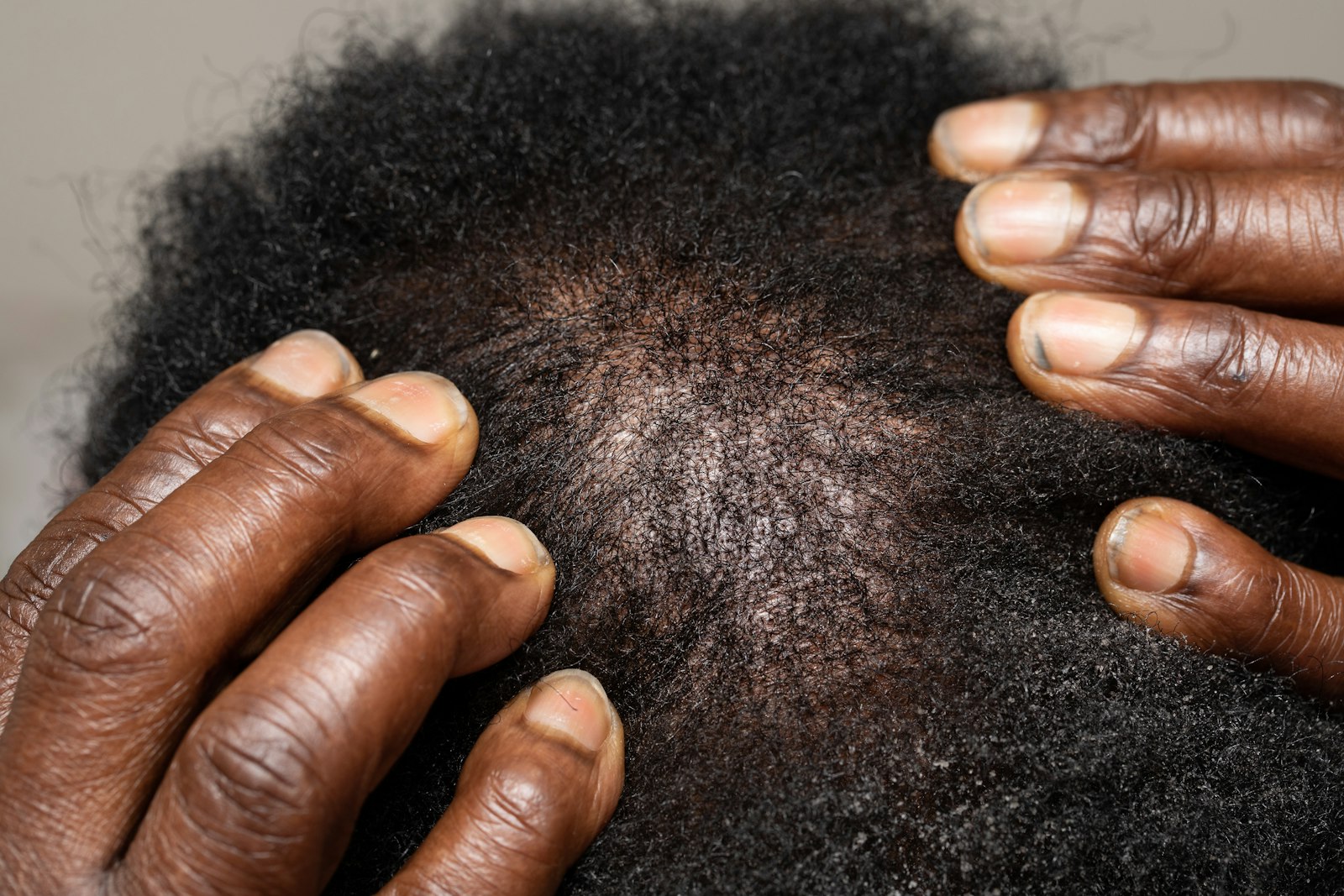
Scarring alopecia: why early diagnosis matters
Most hair loss is non-scarring: the follicles stay alive and hair can often regrow. Scarring alopecia is different. It is a group of conditions in which inflammation damages and replaces hair follicles with scar tissue, so hair in those areas cannot regrow. That is why early diagnosis matters so much.
What is scarring alopecia?
Scarring (cicatricial) alopecias are uncommon conditions in which the body’s inflammation targets the hair follicle. Over time, the follicle is destroyed. Examples include lichen planopilaris, frontal fibrosing alopecia, discoid lupus of the scalp and some forms of folliculitis. Each has its own pattern and treatment.
Early signs to watch for
- hair loss in a patch that seems smooth or shiny, with fewer visible follicle openings
- itching, burning, tenderness or pain on the scalp
- redness, scaling or small bumps around hair follicles
- a hairline that is slowly moving back, sometimes with eyebrow thinning
- pus-filled bumps or crusting that keep returning
- patches that slowly grow larger
These signs can be subtle and are easily mistaken for dandruff or ordinary hair fall, which is one reason scarring alopecia is sometimes diagnosed late.
Why timing matters
Once a follicle has been replaced by scar tissue, hair cannot grow back from it. Treatment cannot reverse scarring that has already happened, but it can calm the inflammation and help stop further hair loss. The earlier treatment starts, the more hair can usually be protected.
How it is diagnosed
- History and examination: how the hair loss started, symptoms and its pattern
- Trichoscopy: a magnified view of the scalp showing follicle openings and signs of inflammation
- Scalp biopsy: a small sample is often needed to confirm the exact type
- Blood tests: sometimes, to look for related conditions
How it is treated
Treatment aims to control inflammation and prevent progression. Depending on the type, it may include medicated lotions or creams, injections into the scalp, tablets that calm the immune response, and regular reviews to check that the condition is under control.
Once the condition has been inactive for a long time, options to improve appearance, such as styling advice or in selected cases hair transplantation, may be discussed. Transplants are only considered when the disease is stable.
When to see a dermatologist
If you have patchy hair loss with itching, pain, redness or scaling, or a hairline that is steadily receding, do not wait. An early assessment can make a lasting difference to how much hair is preserved.
Read more about scarring alopecia at Warang Wellness, or book a consultation to have your scalp examined.
This article is for general information only and is not a substitute for a medical consultation. Suitability, risks and results vary between individuals and are discussed during your consultation with Dr. Omkar Warang.